Security
Anticheat and session integrity
Native C++ module under an Electron launcher. Sessions live only while the monitor holds the process; signed binaries, tamper response, hardware-gated features.
We build custom platforms, game infrastructure and security tools, and keep them running after launch. A boutique studio in Tallinn.
Built for a live online game operator with thousands of daily players. Names withheld, the engineering is ours.
Native C++ module under an Electron launcher. Sessions live only while the monitor holds the process; signed binaries, tamper response, hardware-gated features.
An in-game character with memory, moderation and quest generation, run as an async service beside the game server so the simulation never waits on a model.
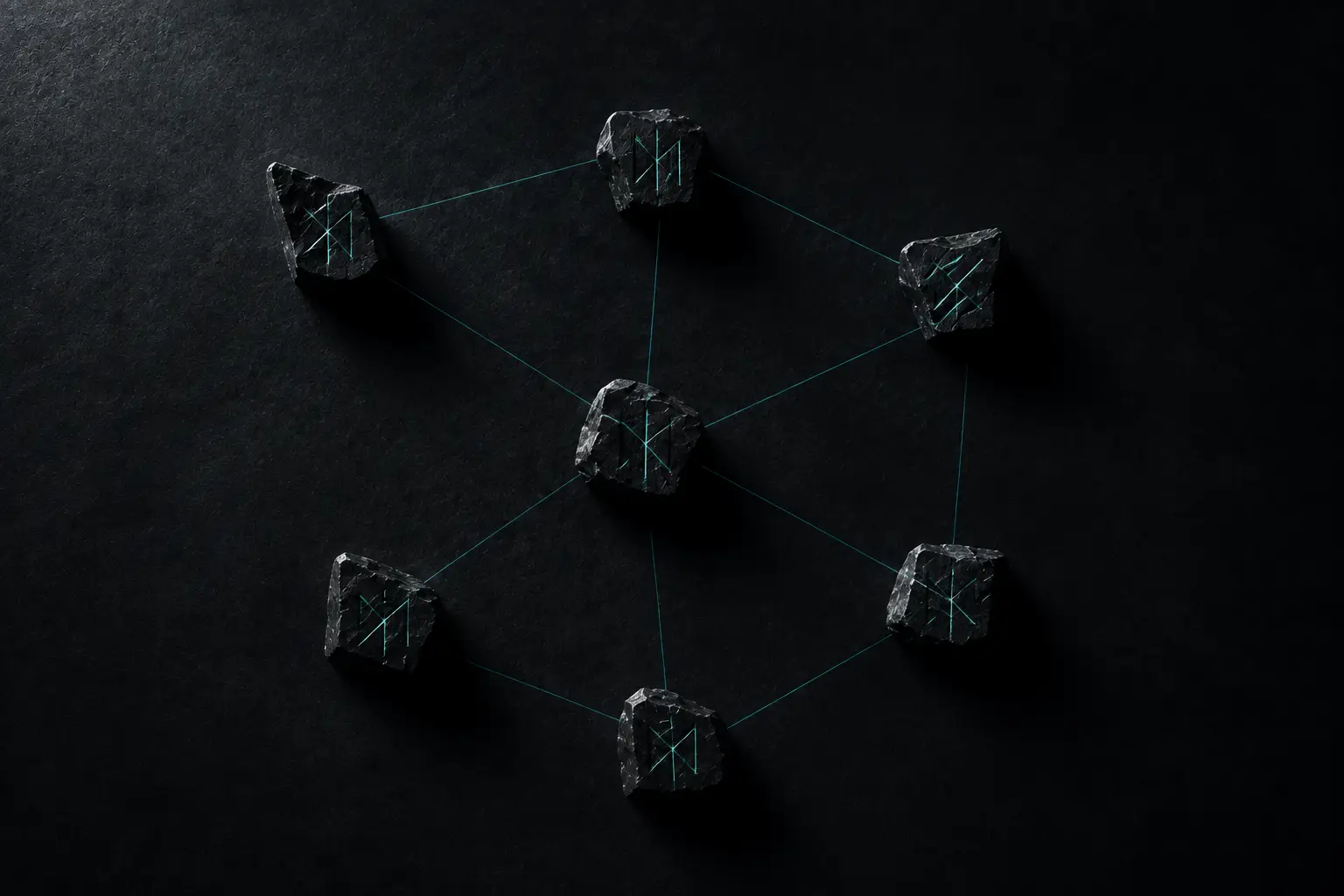
Ten nodes on a private mesh across four continents, one dashboard, agents that push health and a watchdog that notices when they stop.
Signed desktop launcher with hash-verified incremental updates from object storage, account linking, alerts to Discord and Telegram.
A Direct3D 9 to Vulkan translation layer fork: ambient occlusion, reflections, bloom, frame generation and neural rendering, with a detached UI layer so the HUD stays untouched.
Tickets, account verification, event relays and a moderation layer that reads context before it acts, serving a multilingual community around the clock.
Players could run the game client outside the launcher, or with the monitoring module disabled, and the server had no way to tell.
A native monitor the launcher must hold before a session can exist, a heartbeat that stops itself the moment the monitor dies, signed binaries and a tamper response that revokes the session server-side. Renderer features are unlocked per launch by a signed record, so a modified DLL runs with everything off.
Model calls inside the game process parked threads for seconds at a time, starved the connection pool and stalled the packet loop for everyone online.
An asyncio sidecar per game server that owns every model call: chat with tiered memory, a persistent moderation ladder, quest narrative generation, six-language translation with a two-second deadline, and a vector knowledge base for grounded answers. The game sends a snapshot and gets a callback; nothing in the simulation waits.
A dead or isolated node cannot report itself. Alerts that depend on the failing box arrive never.
Per-node agents that push health over an encrypted mesh, a backend watchdog that pulls when they go quiet, regional proxies that report their own path to the game server, and Discord delivery with rate limiting that carries suppressed alerts instead of dropping them.
Full client downloads on every update, no way to reach players outside the game, and a manual patch process that broke whenever the server side was not ready.
A signed Electron launcher that hashes every local file against a manifest and fetches only what changed from object storage, a separate full-install path in chunked volumes, self-update, account linking to the web platform, and notifications that reach Discord and Telegram with the player's consent.
A twenty-year-old engine with no post-processing, no modern upscaling, and a HUD drawn into the same buffer as the world.
A fork of the D3D9-to-Vulkan layer that classifies draws into scene and UI, redirects the UI into its own layer composited last, and applies ambient occlusion, screen-space reflections, bloom, anti-aliasing, frame generation and neural rendering to the world alone. An in-game tuner exposes every knob live for calibration.
A community across six languages, support requests arriving at all hours, and moderation that depended on whoever was awake.
A bot that handles tickets, links Discord identities to game accounts, relays in-game chat and raid events, delivers personal alerts, and runs a moderation layer that scores messages with context and escalates on a persistent ladder instead of reacting to single words.
Nine things we are set up to sell, from the first interface sketch to the server it runs on. One team, the whole stack.
Bespoke platforms, member areas, payments, internal tools. Design-led, built to be run for years.
Websites and web apps, multilingual, fast, measured. From a marketing site to a full member platform.
Game development, client tooling, launchers, renderer work. Engine internals are not off limits.
Authoritative servers, regional edges, anti-DDoS ingress, managed infrastructure at thousands of concurrent players.
Anticheat, integrity checks, signed binaries, rate limiting. The boring parts that stop the expensive parts.
Architecture, API design, reviews, second opinions before an expensive decision.
Linux fleets, databases, backups that restore, monitoring that wakes someone up.
Roadmaps, legacy replacement, vendor and stack selection for teams that have outgrown what they run.
Article 28 and 30 records, privacy notices, processor agreements, written by people who also build the systems.

RunicByte is a boutique studio based in Tallinn. We take on the projects where design, backend and infrastructure have to agree with each other, and we stay on after launch, because the systems we build are the systems we run.
You talk to the people writing the code. No layers, no hand-offs, no ticket queue between you and an answer.
Tell us the goal, what exists today, and your timeline. A developer replies within two working days.